
Divorce can become particularly complicated when one spouse refuses to cooperate, sign divorce documents, or participate in legal proceedings. This situation is common in marriages involving foreign nationals and Vietnamese citizens, especially when the parties live in different countries.
Many people believe that a divorce cannot proceed unless both spouses agree to terminate the marriage. However, Vietnamese law allows unilateral divorce under certain legal conditions, even without consent from the other spouse.
This article explains the legal grounds for unilateral divorce in Vietnam, the procedures involved, and the options available when one spouse refuses to cooperate.
1. Is Divorce Possible Without Spouse Consent in Vietnam?
Under Article 51 of the Law on Marriage and Family 2014, either spouse generally has the right to request a divorce before a competent court.
Vietnamese law recognizes two main forms of divorce:
-
Divorce by mutual consent: Both spouses agree to terminate the marriage and reach the necessary arrangements concerning children and marital property.
-
Unilateral divorce: One spouse requests a divorce without obtaining consent from the other spouse.
Therefore, refusal to sign divorce papers does not automatically prevent the divorce process from proceeding.
However, unilateral divorce is not granted automatically. The requesting spouse must demonstrate that the marriage satisfies the legal conditions for divorce.
An important exception applies to husbands. Under Vietnamese law, a husband is restricted from requesting divorce when the wife is pregnant, giving birth, or raising a child under 12 months old, subject to applicable legal interpretations.
2. What Are the Legal Grounds for Unilateral Divorce?
According to Clause 1, Article 56 of the Law on Marriage and Family 2014, a court may grant unilateral divorce when mediation at court is unsuccessful and there is sufficient evidence of domestic violence or serious violations of marital rights and obligations that have caused the marriage to deteriorate seriously, made continued marital life impossible, and prevented the purposes of marriage from being achieved.
Common circumstances that may support a unilateral divorce request include:
Domestic Violence
Physical violence, psychological abuse, threats, intimidation, or other forms of domestic violence may constitute legal grounds for divorce.
Evidence may include medical records, police reports, witness statements, or other relevant documents.
Adultery and Serious Violations of Marital Obligations
An extramarital relationship may be relevant when it constitutes a serious violation of marital obligations and contributes to the breakdown of the marriage.
However, allegations of adultery should be supported by legally obtained evidence.
Prolonged Separation
A prolonged period of separation may indicate that the marital relationship has deteriorated and that reconciliation is unlikely.
Nevertheless, separation alone does not automatically establish sufficient legal grounds for divorce.
Failure to Fulfill Marital Responsibilities
Serious violations of obligations concerning mutual respect, care, support, and other marital responsibilities may also be considered by the court.
The court will assess the circumstances and available evidence to determine whether the statutory conditions for unilateral divorce have been satisfied.
3. What Happens If One Spouse Refuses to Sign Divorce Papers?
A common misunderstanding is that both spouses must sign divorce documents before the court can process a divorce case.
In unilateral divorce proceedings, this requirement does not apply.
The spouse requesting divorce may independently prepare and submit a divorce petition to the competent Vietnamese court.
The general process includes:
-
Preparing a unilateral divorce petition and supporting documents.
-
Submitting the petition to the competent court.
-
Completing the procedures for acceptance of the case, including payment of the required court fee advance where applicable.
-
Participating in court proceedings, including mediation and evidence submission.
-
Attending the court hearing when required.
-
Receiving the court judgment or decision.
The other spouse will generally be notified and provided with an opportunity to participate in the proceedings.
If the legal grounds for divorce are established, the court may grant the divorce even without agreement from the other spouse.
4. What If the Other Spouse Refuses to Attend Court?
In some divorce cases, the respondent deliberately avoids court proceedings by refusing to receive documents, ignoring summonses, or failing to attend scheduled hearings.
Such conduct may delay the proceedings but does not necessarily prevent the court from resolving the case.
Under Article 227 of the Civil Procedure Code 2015, a court may proceed with a hearing in the absence of the defendant under certain circumstances, including where the defendant has been duly summoned for the second time and remains absent without a legally recognized justification.
However, the court must still comply with procedural requirements concerning notification, summonses, evidence, and jurisdiction.
Where the respondent lives abroad or the current address cannot be determined, additional procedural requirements may apply.
Therefore, obtaining accurate information about the residence and contact details of the other spouse is particularly important.
5. Can Foreigners File for Unilateral Divorce in Vietnam?
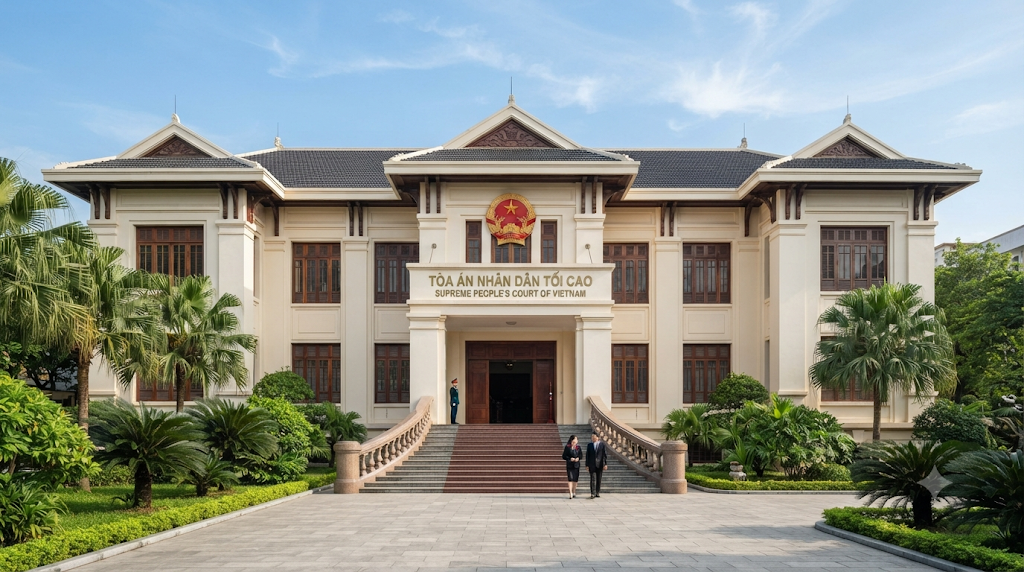
Foreign nationals may be entitled to request unilateral divorce before Vietnamese courts when the case falls within the jurisdiction of the Vietnamese judicial system.
Article 127 of the Law on Marriage and Family 2014 regulates divorce involving foreign elements.
Depending on the circumstances, Vietnamese courts may have jurisdiction over divorce cases involving:
-
A foreign national married to a Vietnamese citizen;
-
A Vietnamese citizen married to a person residing abroad;
-
Foreign nationals permanently residing in Vietnam;
-
Marriages involving children, property, or other relevant legal connections with Vietnam.
However, the competent court and applicable law must be determined based on the specific circumstances and the relevant provisions of the Civil Procedure Code 2015.
Important considerations include the nationality and residence of both spouses, the location of marital property, and whether either party resides outside Vietnam.
For international divorce cases, additional requirements may arise concerning foreign documents, consular legalization, certified translations, and judicial assistance.
6. What Documents Are Required for Unilateral Divorce in Vietnam?
The documents required for a unilateral divorce depend on the circumstances of each case.
Generally, the following documents may be necessary:
-
Unilateral divorce petition in the prescribed form;
-
Marriage certificate or other legally acceptable evidence of marriage;
-
Passport, citizen identification card, or other identification documents;
-
Documents establishing the residence or address of the parties;
-
Birth certificates of children, if applicable;
-
Documents concerning marital property and financial obligations, where relevant;
-
Evidence supporting the legal grounds for divorce.
For documents issued outside Vietnam, consular legalization and certified Vietnamese translations may be required unless an applicable exemption exists.
If the other spouse refuses to provide the marriage certificate or other essential documents, the requesting spouse may need to obtain replacement records or request assistance from the competent authorities.
Legal advice may be necessary to determine the appropriate documentary requirements.
7. How Long Does Unilateral Divorce Take in Vietnam?
The duration of unilateral divorce proceedings varies depending on the complexity of the case.
Under Article 203 of the Civil Procedure Code 2015, the ordinary preparation period for trial in a divorce dispute is generally four months from the date of case acceptance.
In qualifying circumstances, this period may be extended by up to two additional months.
After the court issues a decision to bring the case to trial, the hearing is generally scheduled within one month, or up to two months where a legitimate reason exists.
However, these statutory periods do not necessarily reflect the total duration of the divorce process.
Additional time may be required where:
-
One spouse refuses to cooperate;
-
The respondent resides outside Vietnam;
-
The court must collect additional evidence;
-
There are disputes involving children or marital property;
-
Foreign documents require verification;
-
International judicial assistance is necessary.
As a result, divorce cases involving foreign elements may take considerably longer than domestic cases.
8. How Are Child Custody and Marital Property Handled?
In unilateral divorce proceedings, the court may also resolve disputes concerning children, marital property, and related financial obligations.
Child Custody
Under Article 81 of the Law on Marriage and Family 2014, parents may reach an agreement concerning the care, custody, and upbringing of children following divorce.
If no agreement is reached, the court will determine custody arrangements based on the best interests of the children.
For children aged seven or older, the court must consider their wishes.
Children under 36 months old are generally placed in the direct care of the mother, except where the mother is unable to provide appropriate care or another arrangement is consistent with the interests of the children.
Division of Marital Property
Under Article 59 of the Law on Marriage and Family 2014, marital property may be divided by agreement between the spouses.
If no agreement is reached, the court will determine the division of property in accordance with applicable law.
Although equal division is the general starting principle for common marital property, the court considers several factors, including:
-
The circumstances of each spouse;
-
Contributions to the creation and maintenance of marital property;
-
Protection of legitimate interests in production, business, and professional activities;
-
Fault involving violations of marital rights and obligations.
Property located outside Vietnam may raise additional questions concerning jurisdiction and applicable law.
9. Is a Divorce Lawyer Necessary for Unilateral Divorce?
Vietnamese law does not require legal representation in every unilateral divorce case.
However, assistance from a qualified divorce lawyer may be particularly valuable where the case involves foreign elements or a lack of cooperation from the other spouse.
A divorce lawyer may assist with:
-
Assessing whether sufficient legal grounds for divorce exist;
-
Identifying the competent Vietnamese court;
-
Preparing divorce petitions and supporting documents;
-
Collecting and presenting relevant evidence;
-
Addressing procedural difficulties caused by an uncooperative spouse;
-
Providing legal advice concerning child custody and marital property;
-
Representing or assisting clients during court proceedings, where permitted by law.
Professional legal assistance may help reduce procedural errors and protect the legitimate rights and interests of the parties.

10. Conclusion
A refusal to sign divorce papers does not necessarily prevent a divorce in Vietnam.
Vietnamese law permits unilateral divorce where the requesting spouse establishes sufficient legal grounds and complies with the applicable court procedures.
However, cases involving an uncooperative spouse, foreign nationality, overseas residence, or disputes concerning children and property may present additional legal challenges.
Understanding the relevant legal requirements and preparing appropriate evidence are essential steps before initiating unilateral divorce proceedings.
Need Legal Assistance With Divorce in Vietnam?
If your husband or wife refuses to cooperate with divorce proceedings, obtaining professional legal advice can help you understand the available legal options.
Divorce in Vietnam provides legal information and assistance to Vietnamese citizens, foreign nationals, and international couples dealing with divorce and family law matters in Vietnam.
Contact our legal team for guidance on unilateral divorce procedures, court jurisdiction, required documents, and related family law issues.
Disclaimer: This article is intended for general informational purposes only and does not constitute legal advice. The applicable legal procedures and outcomes depend on the circumstances of each case and the laws in force at the relevant time.


