
Contact Center
+84 903419479
Contact Center
+84 903419479
Divorce Counseling 22/09/2026
In many international marriages connected to Vietnam, one spouse earns most of the family income and transfers money every month to the other spouse for daily living costs. The money may be intended for rent, food, children, medical care, education, family travel or other household expenses. Problems often arise when the earning spouse later discovers that the receiving spouse did not use all of the money for the marital family, but sent part or all of it to their own parents, siblings or relatives.
When divorce begins, the earning spouse may ask whether the transferred money can be claimed back, deducted from the other spouse’s share, or treated as dissipation of common marital assets. There is no automatic answer. The outcome depends on the source of the money, the purpose of the transfer, whether both spouses agreed, the amount and frequency of the payments, available evidence and how the Vietnamese court assesses the overall property division.
A common misunderstanding is that the spouse who earned the income automatically owns all of that money. In a Vietnam related divorce, this is usually not the safest way to frame the issue.
In general, income earned by either spouse during the marriage is treated as common marital property unless it can be proven to be separate property or unless there is a valid property agreement between the spouses. Salary, business income, profits and other income created during the marital period may therefore belong to the marital estate, even if only one spouse directly earned the money.
This means the legal argument should not simply be, “I earned the money, so my spouse must return it.” A more practical argument is whether common marital assets were used outside the common family purpose, without consent, in a way that unfairly affected the remaining marital property.
For foreign spouses and overseas Vietnamese clients, this distinction is important. A spouse may feel that the money was “my income,” especially if they worked abroad and sent money to Vietnam. However, when the money was earned during marriage, the court may first consider whether it forms part of the common marital property before deciding whether the later transfers to relatives should affect property division.
For a broader explanation of marital assets, foreign clients may also review how Vietnam approaches property handled after divorce in Vietnam.

Monthly transfers between spouses are often treated as money used for ordinary family needs. This is especially true where the payments were made regularly and the receiving spouse managed the household, cared for children or paid daily expenses in Vietnam.
Normal household expenses may include:
If the earning spouse transferred money every month without requiring detailed accounting, and the receiving spouse used the money for the family’s ordinary needs, it may be difficult to later separate every expense item. Courts generally look at the practical reality of family life. Not every imperfect or undocumented use of money becomes a legal claim.
However, the situation changes when a substantial part of the money was not used for the marital household but was sent to the receiving spouse’s own parents, siblings or relatives. In that case, the court may need to consider whether those transfers were agreed, reasonable, necessary or improper.

The legal treatment of marital money sent to a spouse’s family during marriage depends heavily on the facts. The same bank transfer may be viewed differently depending on timing, amount, purpose and consent.
If both spouses agreed that part of the family income could be used to support parents or relatives, it may be difficult to claim that money back later. This is especially true if the support was discussed openly, reflected in messages or consistent with the family’s financial habits during the marriage.
For example, spouses may agree to help elderly parents with medical costs or provide occasional support during difficult periods. If the payments were reasonable compared with the family’s income and did not significantly harm the marital estate, the court may view them as part of family life rather than improper disposal of common assets.
Even without a formal agreement, occasional and reasonable support to relatives may not automatically justify a reimbursement claim. Vietnamese family culture may include financial support to parents or close family members. A court may consider whether the support was proportionate, transparent and consistent with the couple’s financial capacity.
For example, a small amount sent from time to time to assist a parent with medical expenses may be treated differently from large monthly transfers that consumed half of the household allowance.
If the receiving spouse secretly sent money to their own family for a long period, without the other spouse’s knowledge and without any clear family necessity, the issue becomes more serious. The earning spouse may argue that common marital assets were used outside the common family purpose without consent.
The argument may be stronger if the transfers were repeated, substantial and inconsistent with the family’s living expenses. In this situation, the court may examine bank records, messages, family expense documents and the financial impact on the remaining marital property.
Transfers made shortly before separation, divorce filing or major marital conflict may receive closer scrutiny. If one spouse moved large amounts of marital money to relatives at a time when divorce was likely, the other spouse may argue that the transfer was intended to reduce the marital estate or prevent fair division.
This does not mean every pre divorce transfer is automatically considered dissipation. The court will still look at evidence. The transferring spouse may argue that the money was used to repay a family debt, support medical treatment or meet an urgent family need. The outcome depends on whether that explanation is supported by documents and whether the transfer was reasonable in the circumstances.

A spouse cannot assume that money transferred to the other spouse during marriage will automatically be returned after divorce. The court may view some payments as household expenses, agreed family support or ordinary marital spending.
However, if there is evidence that common marital assets were misused, concealed or transferred to relatives without consent, the earning spouse may ask the court to consider those amounts when dividing the common property.
Possible remedies may include:
Recovery directly from the relatives may be difficult unless there is a clear legal basis and strong evidence. For example, the earning spouse would need to show why the relatives should legally return the money, not merely that they received it. If the relatives received the money as a gift, family support or repayment of a debt claimed by the other spouse, the dispute may become more complicated.
For this reason, in many divorce cases, the more practical approach is to raise the issue within the property division dispute rather than assuming there will be a separate and straightforward repayment claim against the relatives.
Foreign spouses dealing with this issue should also understand the broader rules on property division after divorce in Vietnam and the principles of common property division upon divorce.

Consider a husband working abroad who sends USD 2,000 per month to his wife in Vietnam for household expenses. Later, during divorce, he discovers that she regularly sent USD 1,000 per month to her parents.
The legal outcome may differ depending on the facts.
If the husband knew and agreed that USD 1,000 per month would be used to support her parents, it may be difficult for him to claim the money back. The court may see the transfers as an agreed financial arrangement during marriage.
If he did not know about the transfers, the court may look more closely at the purpose, amount and financial impact. If the wife can prove that her parents were seriously ill, that the payments were necessary, and that the husband had previously accepted similar family support, the court may be cautious about treating the payments as misconduct.
If the transfers were small, occasional and reasonable compared with the couple’s income, the court may consider them ordinary family support rather than dissipation.
If the transfers were large, regular, secret and made when the marriage was already breaking down, the husband may have a stronger basis to argue that common marital assets were used outside the marital family’s purpose. The court may then consider whether the transferred amount should affect the division of remaining common property.
If the transfers increased shortly before divorce filing, or if the wife cannot explain the purpose of the payments, the court may scrutinize the transactions more carefully. Bank records, messages and expense documents will be important.
This example shows why the issue is not only about who earned the money. The key question is whether common marital property was used properly, transparently and for a legitimate family purpose.

When assessing marital money sent to a spouse’s family in a Vietnam divorce, the court may consider several practical factors.
Important factors may include:
The court may also consider the financial condition of both spouses. If the earning spouse had high income and the transfers were modest, the issue may be assessed differently from a case where the transfers consumed most of the family’s resources.
Where the parties disagree about whether property is common or separate, evidence will be essential. Clients may need to understand how to prove marital property is joint property when preparing a property division claim.
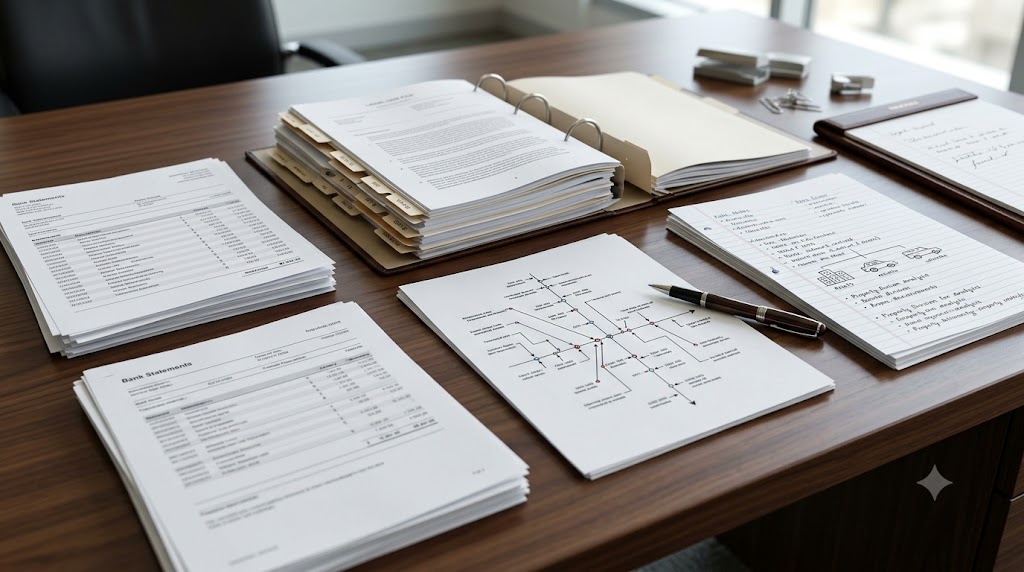
Evidence is usually the deciding factor in disputes about household allowance transferred to relatives before divorce. Emotional accusations are rarely enough. The spouse raising the issue should prepare a clear, document based record.
Useful evidence may include:
A clear timeline is also important. The timeline should show when the earning spouse sent money, when the other spouse transferred money to relatives, when marital conflict began, and when divorce proceedings were started or expected.
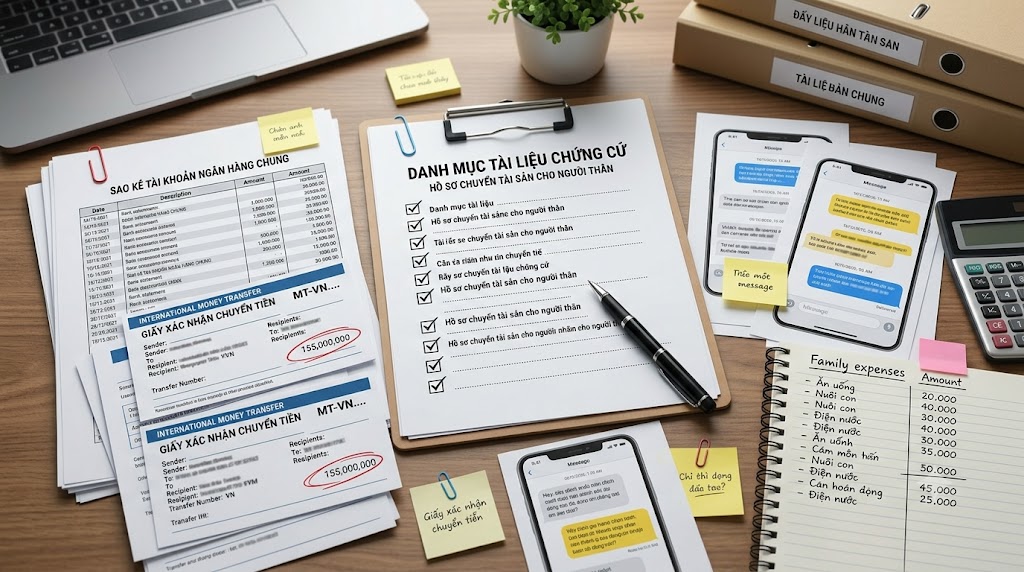
A spouse who discovers that marital income or monthly household allowance was transferred to relatives should avoid reacting only with anger. The stronger approach is to organize the issue as a legal and evidentiary claim.
Practical steps include:

Money transferred to a spouse and then sent to that spouse’s parents, siblings or relatives is not automatically recoverable in a Vietnam divorce. Some transfers may be treated as ordinary household spending or agreed family support. Other transfers, especially if secret, repeated, large or made shortly before divorce, may become relevant when the court divides common marital property.
The key issue is not simply that one spouse earned the income. The stronger legal question is whether common marital assets were used outside the common family purpose without consent and whether that use unfairly affected the marital estate.
For foreign spouses, expats, overseas Vietnamese and international couples, these disputes often require careful review of bank statements, transfer records, messages and family expense documents. If you are involved in a Vietnam related divorce and need to assess bank transfers, marital income or suspected dissipation of common property, you may contact Apolo Lawyers for a case review.

Address: 108 Tran Dinh Xu Street, Cau Ong Lanh Ward, Ho Chi Minh City, Vietnam
Tel: (+8428) 66.701.709 | (+84) 908.043.086
Email: contact@apolo.com.vn
Hotline: (+84) 903.600.347
Address: 9th/F, Tower K&M Building, 33 Ung Van Khiem St., Thanh My Tay Ward, HCM City, Vietnam
Tel: (+8428) 35.059.349 | (+84) 908.097.068
Email: contact@apolo.com.vn
Hotline: (+84) 979.48.98.79


