
Contact Center
+84 903419479
Contact Center
+84 903419479
Property Division 15/09/2026
When one spouse commits adultery in Vietnam, the innocent spouse often asks whether the cheating spouse will lose marital property or receive a smaller share after divorce.
The practical answer is no. Adultery does not automatically make the cheating spouse lose all marital assets. In Vietnam divorce cases, property division is generally based on marital property principles, contribution, family circumstances, protection of legitimate rights, and other relevant factors. However, fault such as adultery may be considered by the court in certain circumstances, especially where the conduct contributed to the breakdown of the marriage or caused damage to the family’s interests.
For foreign spouses, overseas Vietnamese, expats, and mixed Vietnamese foreign marriages, the key point is to prepare a property case based on evidence and legal arguments, not only on moral fault.
Adultery does not automatically decide the division of marital assets in Vietnam. A spouse who committed adultery is not automatically deprived of property, and the innocent spouse is not automatically awarded a larger share.
Vietnamese courts usually distinguish between two issues. The first issue is whether the marriage has broken down and divorce should be granted. Adultery may be relevant to this issue, especially in unilateral divorce cases where one spouse argues that the marriage can no longer continue. For this issue, readers may refer to Unilateral Divorce Due To A Cheating Spouse In Vietnam.
The second issue is how marital property should be divided. This requires a separate assessment. The court will not normally divide property based only on who behaved badly. Instead, the court assesses the nature of the property, each party’s contribution, the family’s circumstances, and the legitimate rights of both spouses.

In a Vietnam divorce, the court usually starts by identifying whether the disputed assets are marital property or separate property. Marital property may include assets created, acquired, or developed during the marriage, unless there is evidence showing that an asset is separate property or subject to a different legal arrangement.
After identifying the assets, the court may consider factors such as each spouse’s contribution to creating and maintaining the property, the circumstances of each spouse after divorce, the need to protect children or dependents, and whether one party caused damage to the family’s property or legitimate interests.
This means that a cheating spouse divorce Vietnam case is not only about proving adultery. It is also about proving what assets exist, when and how they were acquired, who contributed to them, whether assets were concealed or transferred, and whether any misconduct caused financial harm. For a deeper explanation of property ratio factors, see Factors Affecting The Ratio Of Property Divided By Husband And Wife Upon Divorce Under Vietnamese Law.

Adultery may become relevant when it is connected to the breakdown of the marriage, financial damage, or harm to the family’s legitimate interests. The court may assess whether the conduct affected the marriage and whether it had a real impact on property, children, family finances, or the rights of the other spouse.
For example, adultery may be more relevant if there is evidence that one spouse used marital funds to support an outside relationship, transferred assets to another person, hid income, abandoned family obligations, or created debts that harmed the family.
In those situations, the issue is not simply “cheating.” The legal question is whether the conduct had consequences that should be considered when dividing marital property.
By contrast, if the evidence only shows emotional betrayal but does not show financial impact, asset concealment, misuse of marital property, or other legally relevant consequences, the court may give limited weight to that fact in the property division. This is why property division after adultery Vietnam remains case-specific.
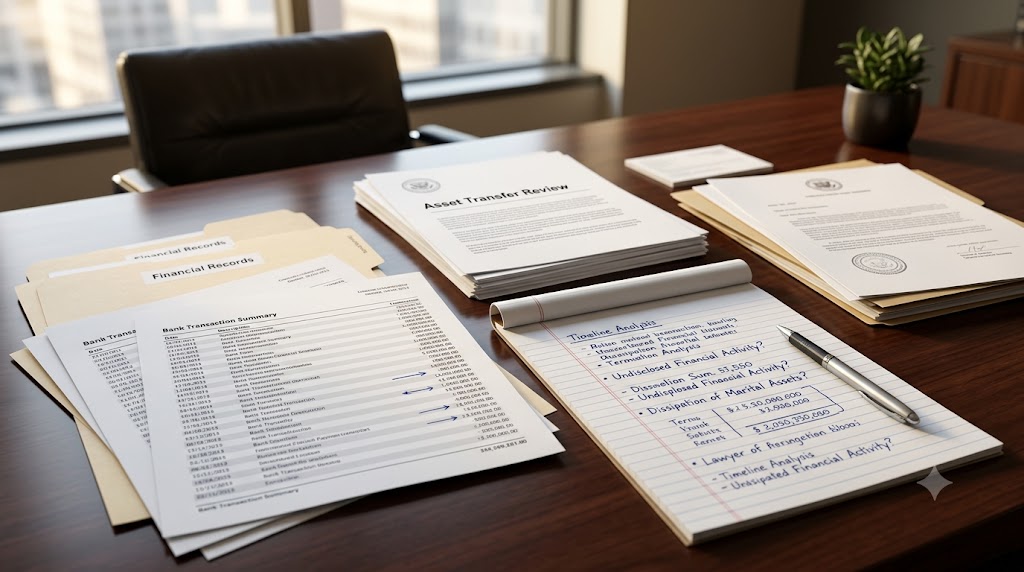
Evidence should be relevant, reliable, and connected to the legal issues in dispute. Foreign spouses should avoid assuming that all personal evidence will be useful in court.
Potentially useful evidence may include messages, emails, photographs, or other materials showing an adulterous relationship, but these materials are usually stronger when combined with financial evidence. Bank statements, asset transfer records, property sale documents, loan documents, unusual withdrawals, or proof that marital funds were used for a third party may be more important for the property dispute.
Evidence of adultery alone may help support a divorce claim, but it may not be enough to change the property ratio. Evidence becomes more persuasive when it shows a connection between misconduct and damage to the family’s property or legitimate interests.
Foreign clients should also be careful with illegally obtained evidence. Hacked accounts, secret surveillance, private recordings, or confidential data collected without legal advice may create procedural and privacy risks. Before using sensitive materials, it is safer to have a Vietnam divorce lawyer assess whether the evidence can be used and how it should be presented. For the separate issue of possible legal consequences of adultery, see How Is “Adultery” Punished In Vietnam.
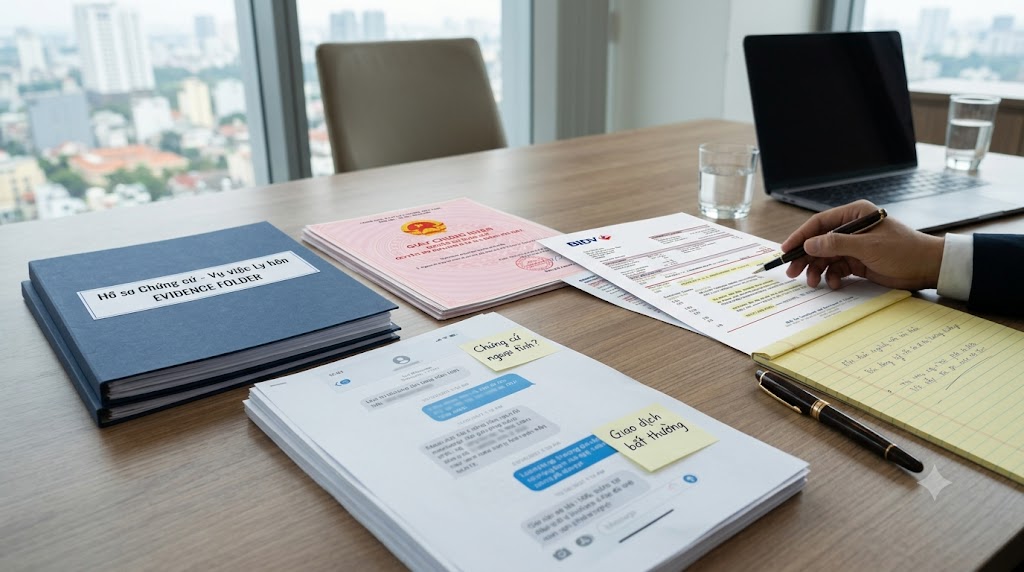
Before filing or responding to divorce, the innocent spouse should prepare both the relationship evidence and the property evidence. A strong property strategy usually starts with a clear list of assets, debts, documents, and financial records.
Useful preparation may include listing all known marital assets, identifying assets acquired before and during marriage, collecting ownership documents, preserving bank records, checking possible asset transfers, and reviewing whether any property is registered under only one spouse’s name.
The innocent spouse should also avoid public accusations, emotional messages, or social media posts that may weaken negotiation or create privacy risks. In many cases, a calm evidence strategy is more effective than confrontation.
Where the divorce is unilateral, asset disputes can become more complex because one party may deny the claim, delay disclosure, or challenge the evidence. For related reading, see Division Of Marital Assets In Unilateral Divorce Under Vietnamese Law.
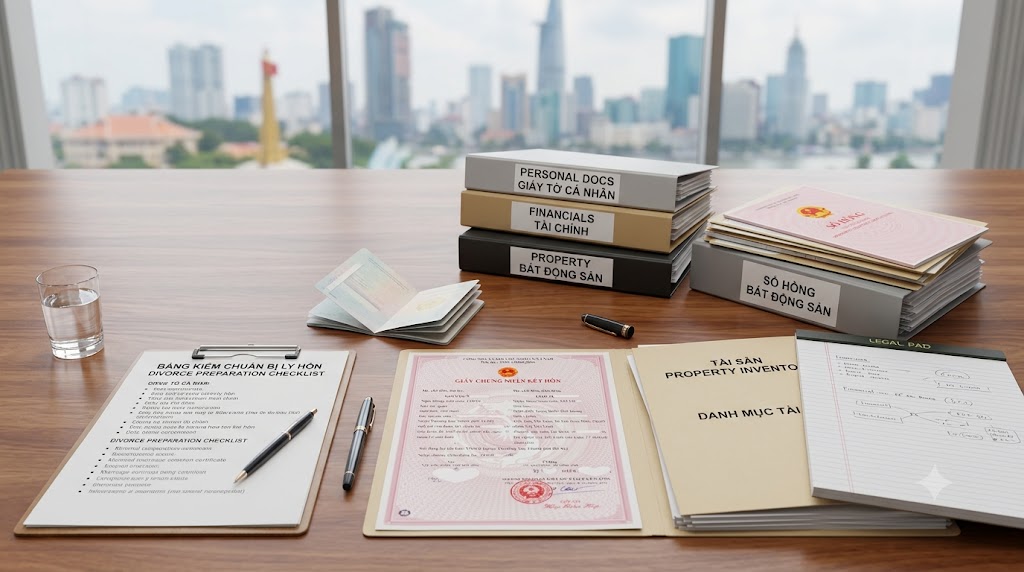
Foreigners and expats face additional risks in Vietnam divorce and property disputes. These may include language barriers, limited access to local documents, assets registered under one spouse’s name, property located in more than one country, business assets mixed with family assets, or uncertainty about whether foreign documents are properly prepared for use in Vietnam.
Mixed Vietnamese foreign marriages may also involve real estate restrictions, remittances, overseas income, family contributions from abroad, and documents issued outside Vietnam. These facts can affect how the court understands contribution, ownership, and the source of funds.
A common mistake is focusing too much on adultery while failing to prepare the property case. Even if cheating is proven, the property result may depend more heavily on asset classification, financial records, contribution evidence, and whether the misconduct caused measurable harm.
APOLO LAWYERS - Solicitors & Litigators assists foreign spouses, overseas Vietnamese, expats, and mixed-nationality couples in Vietnam divorce cases involving adultery, marital assets, and property disputes.
Our team can help assess evidence, classify marital and separate assets, prepare divorce and property claims, support negotiation, and represent clients in court proceedings in Vietnam. Where adultery is relevant, we help clients evaluate whether the evidence may support the divorce claim, the property claim, or both.
Because adultery does not automatically determine the property division ratio, each case should be assessed based on the facts, the documents, the financial evidence, and the court’s case-specific evaluation. Legal advice before filing, confronting the other spouse, or signing a settlement can help protect your rights and avoid unnecessary procedural risks.

No. A cheating spouse does not automatically lose all marital property. The court considers marital property principles, contribution, family circumstances, legitimate rights, and other relevant factors.
It may be considered in certain circumstances, but it does not guarantee a larger share. The innocent spouse should show how the misconduct affected the marriage, family interests, or property rights.
Usually not. Proof of adultery may support the divorce claim, but property division usually requires evidence of assets, ownership, contribution, source of funds, debts, and any financial harm.
Useful evidence may include communications, photographs, financial records, bank statements, asset transfer documents, and proof that marital property was used or concealed because of the outside relationship.
Yes, but evidence should be collected lawfully and strategically. Foreign spouses should seek legal advice before using private messages, recordings, surveillance materials, or documents obtained from another person’s account.
Address: 108 Tran Dinh Xu Street, Cau Ong Lanh Ward, Ho Chi Minh City, Vietnam
Tel: (+8428) 66.701.709 | (+84) 908.043.086
Email: contact@apolo.com.vn
Hotline: (+84) 903.600.347
Address: 9th/F, Tower K&M Building, 33 Ung Van Khiem St., Thanh My Tay Ward, HCM City, Vietnam
Tel: (+8428) 35.059.349 | (+84) 908.097.068
Email: contact@apolo.com.vn
Hotline: (+84) 979.48.98.79


