
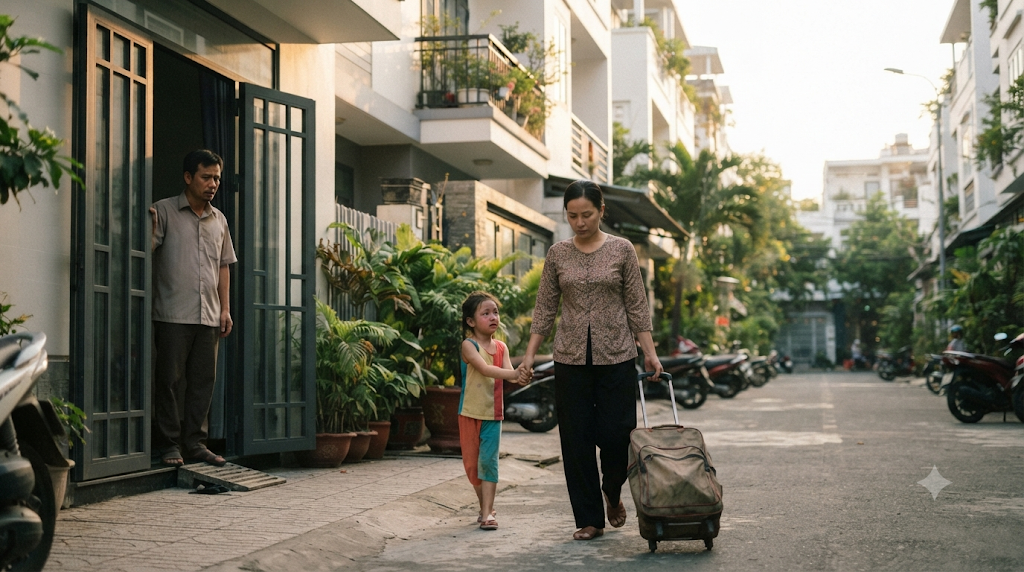
Divorce proceedings can become particularly complicated when children are involved. One of the most concerning situations occurs when a husband or wife takes a child away from the family home without informing or obtaining the consent of the other parent while the divorce case is still pending before a Vietnamese court.
Is such conduct legal under Vietnamese law? Can the other parent demand the return of the child? Does taking the child away affect the court's decision on child custody?
This article explains the relevant legal principles and the options available to parents facing this situation in Vietnam.
1. Do Both Parents Have Equal Rights Over Their Children During Divorce Proceedings?
Under Article 69 of the Law on Marriage and Family 2014, parents have the obligation and right to love, care for, nurture, protect, and safeguard the lawful rights and interests of their children.
Furthermore, Article 71 provides that parents have equal obligations and rights to care for and raise their minor children.
Importantly, filing for divorce does not automatically terminate or restrict the parental rights of either spouse.
Until the court issues a legally effective decision concerning child custody, both parents generally retain their parental rights and responsibilities, unless a competent authority has imposed specific restrictions or protective measures.
Therefore, neither parent should assume that initiating divorce proceedings gives that parent an exclusive right to decide where the child will live.

2. Can a Husband or Wife Take a Child Away from the Family Home Without the Other Parent's Consent?
Vietnamese law does not establish a general prohibition against a parent taking a child away from the family home during pending divorce proceedings.
However, this does not mean that either parent has an unrestricted right to relocate the child or prevent the other parent from maintaining contact with the child.
The legality and consequences of such conduct depend on several factors, including:
-
Whether the child is being temporarily taken elsewhere or permanently relocated;
-
Whether the relocation is necessary to protect the child from violence, abuse, or other risks;
-
Whether the parent taking the child is deliberately preventing contact with the other parent;
-
Whether there is an existing court order or interim measure concerning the child;
-
Whether the relocation adversely affects the child's education, health, emotional well-being, or living conditions.
For example, if a mother temporarily takes her child to stay with relatives because of domestic violence, such action may be justified by the need to protect the child.
Conversely, if a father secretly relocates the child to another province and deliberately prevents the mother from contacting the child to gain an advantage in the custody dispute, the court may consider that conduct when assessing the child's best interests.
The key issue is not simply whether one parent consented to the relocation, but whether the conduct violates applicable legal obligations or adversely affects the child's lawful rights and interests.
3. Does Taking the Child Away Give One Parent an Advantage in the Custody Dispute?
Some parents believe that taking the child away and becoming the child's primary caregiver during divorce proceedings will automatically improve their chances of obtaining custody.
However, this assumption is not necessarily correct.
Under Article 81 of the Law on Marriage and Family 2014, if parents cannot agree on who will directly raise their child after divorce, the court will decide based on the child's interests in all aspects.
The court may consider factors such as:
Financial and living conditions: Whether each parent can provide a stable home and meet the child's essential needs.
Caregiving arrangements: Which parent can provide appropriate daily care, supervision, education, and emotional support.
Continuity and stability: Whether the proposed custody arrangement will unnecessarily disrupt the child's education, living environment, or development.
Relationship with the other parent: Whether each parent is willing and able to respect the child's relationship with the other parent.
The child's wishes: For children aged seven or older, the court must consider their wishes in accordance with applicable law.
For children under 36 months of age, the law generally favors direct care by the mother, subject to statutory exceptions and the child's interests.
Therefore, a parent who unilaterally relocates a child may not necessarily gain an advantage.
If the relocation disrupts the child's life or demonstrates an unwillingness to respect the other parent's lawful rights, the court may take these circumstances into account.
Nevertheless, the relocation itself does not automatically disqualify that parent from obtaining custody.

4. What Can You Do If Your Spouse Takes Your Child Away During Divorce Proceedings?
If your spouse takes your child away without your agreement while the divorce case is pending, several legal and practical options may be available.
Step 1: Establish the Child's Whereabouts and Safety
The immediate priority should be confirming that the child is safe and receiving appropriate care.
You should attempt to contact your spouse through reasonable means and request information about the child's current location, health, and living arrangements.
Where there is a genuine concern about the child's safety, you may contact the competent authorities for assistance.
Step 2: Preserve Relevant Evidence
Evidence may be important if the relocation becomes an issue in the custody proceedings.
Relevant materials may include:
-
Messages or emails showing that the child was taken away without prior notice;
-
Records of unsuccessful attempts to contact the child;
-
Evidence that the child's schooling or medical care has been disrupted;
-
Documents showing your previous involvement in the child's daily care;
-
Evidence of threats, coercion, violence, or deliberate obstruction of parental contact, if applicable.
Such evidence can help the court understand the circumstances surrounding the relocation and its potential impact on the child.
Step 3: Notify the Court Handling the Divorce Case
If the divorce case has already been accepted by a Vietnamese court, you may submit a written statement informing the court about the relocation.
The statement may explain:
-
When and how the child was taken away;
-
Whether the other parent provided information about the child's location;
-
Whether you have been prevented from contacting or caring for the child;
-
How the relocation has affected the child's living conditions and welfare;
-
What you request the court to consider when resolving the custody dispute.
You may also submit supporting evidence and request that the court consider the circumstances when determining the appropriate custody arrangement.
Step 4: Consider Whether an Urgent Interim Measure Is Available
Under the Civil Procedure Code 2015, parties may request the court to apply provisional emergency measures where the statutory conditions are satisfied.
Article 114 identifies the available provisional emergency measures, while Article 115 addresses the assignment of a minor to an individual or organization for care, nurturing, supervision, and education during the resolution of a case.
However, such measures are not automatically available merely because one parent has relocated a child without the other parent's consent.
The court must assess the applicable legal requirements, the urgency of the circumstances, and the evidence supporting the request.
Accordingly, parents should obtain legal advice before submitting an application for an urgent interim measure.

5. Can You Ask the Police to Bring the Child Back?
A common question is whether the police can intervene and immediately return the child to the parent remaining at the family home.
In general, a disagreement between parents over where their child should live during divorce proceedings is a family-law dispute and does not automatically constitute a criminal offense.
Police involvement may be appropriate where there is evidence of violence, threats, unlawful detention, abuse, or other conduct potentially violating the law.
However, the mere fact that one parent has taken the child to another residence does not automatically authorize the police to transfer the child to the other parent.
Furthermore, the absence of a final custody decision may make the situation more complicated because both parents generally retain parental rights.
Where there is an immediate risk to the child's safety, the competent authorities should be contacted promptly.
Otherwise, the appropriate approach will generally involve addressing the dispute through the court handling the divorce proceedings.

6. What If the Child Is Taken to Another Province or Outside Vietnam?
Relocating a child to another province may create additional practical difficulties, particularly where the relocation interferes with schooling, medical care, or communication with the other parent.
The situation can become even more complicated when one parent intends to take the child abroad.
For international families, relevant issues may include:
-
The child's nationality and passport;
-
Immigration and exit requirements;
-
The existence of any custody-related court order;
-
Whether the relocation involves the wrongful removal or retention of the child under applicable law;
-
The availability of legal remedies in Vietnam and the destination country.
Parents should not assume that the existence of a pending divorce case automatically prevents a child from leaving Vietnam.
Similarly, the fact that a child has been taken abroad does not automatically establish that the accompanying parent has committed a criminal offense.
Each situation requires an assessment of the relevant Vietnamese laws, any applicable international agreements, and the circumstances of the child's relocation.
If there is a credible risk that your spouse intends to take your child abroad without your agreement, seeking legal advice as early as possible is particularly important.

7. Can a Parent Be Penalized for Preventing Contact Between the Child and the Other Parent?
Vietnamese family law recognizes the importance of maintaining parental relationships.
Article 83 of the Law on Marriage and Family 2014 addresses the rights and obligations of the parent who does not directly raise the child after divorce, including the right and obligation to visit the child without obstruction.
Article 82 also provides that the parent who does not directly raise the child has the obligation to respect the child's right to live with the parent directly raising the child.
These provisions primarily govern parental rights and obligations following divorce. They should not be interpreted as automatically creating a specific visitation schedule while the divorce case remains pending.
Nevertheless, deliberate interference with the child's relationship with the other parent may be relevant to the court's assessment of parental conduct and the child's best interests.
Depending on the circumstances and applicable legal provisions, certain acts of unlawful obstruction may also give rise to legal consequences.
The existence of a violation, however, must be assessed on the specific facts rather than presumed solely from a lack of communication between the parents.

8. How Can a Divorce Lawyer in Vietnam Help?
Disputes involving the unilateral relocation of children require careful legal assessment, particularly when the parents are of different nationalities or when one parent intends to relocate the child internationally.
A divorce lawyer in Vietnam may assist by:
-
Reviewing the legal status of the pending divorce proceedings;
-
Assessing the rights and obligations of both parents;
-
Preparing written statements and evidence for submission to the court;
-
Evaluating whether an application for provisional emergency measures is legally appropriate;
-
Representing the client in child custody proceedings;
-
Advising on cross-border family-law issues where foreign elements are involved.
Taking legal action promptly may help protect the child's welfare and prevent further complications in the custody dispute.

9. Conclusion
When one spouse takes a child away from the family home during divorce proceedings in Vietnam, the conduct is not automatically unlawful. However, it may have significant legal consequences depending on the circumstances.
Both parents generally retain parental rights while the divorce is pending, and neither parent automatically acquires exclusive custody simply by taking physical possession of the child.
The central consideration in any child custody dispute is the child's best interests, not which parent succeeds in taking the child away first.
If your spouse has relocated your child without your agreement, you should preserve relevant evidence, assess any immediate safety concerns, and consider bringing the matter before the court handling your divorce case.
Need Legal Assistance with Child Custody During Divorce in Vietnam?
At Divorce in Vietnam, our legal team assists Vietnamese and foreign clients with divorce proceedings, child custody disputes, and family-law matters involving international elements.
If your spouse has taken your child away during ongoing divorce proceedings, we can help you understand your legal options and take appropriate steps to protect your parental rights and the best interests of your child.
Contact Divorce in Vietnam for legal consultation and assistance with your case.

Disclaimer: This article provides general legal information and does not constitute legal advice for any particular case. The appropriate legal remedies depend on the specific circumstances and applicable laws.


